Why Businesses Are Moving to Container & Microservices Architecture
.png)
Published on August 18, 2026 | Category: DevOps
As businesses scale their digital operations, traditional application architectures can make software harder to update, maintain, and scale. Large monolithic applications often require teams to deploy multiple components together, even when only one part of the application needs to change.
This is one reason more organizations are adopting Container & Microservices Services to build flexible, scalable, and cloud-ready applications.
By combining containers with a microservices architecture, businesses can break complex applications into smaller, independently manageable components. This approach can also work closely with modern DevOps Services, helping development and operations teams deliver software more efficiently.
What Are Container & Microservices Services?
Container & Microservices Services combine two modern approaches to application development.
Microservices architecture breaks an application into smaller services, with each service responsible for a specific business function. For example, an e-commerce application could have separate services for user accounts, product catalogues, payments, and orders.
Containers package an application and its dependencies into a consistent, isolated environment. This makes applications easier to deploy across development, testing, and production environments.
Together, containers and microservices can create a more flexible foundation for modern software development.
Why Are Businesses Moving Away from Monolithic Applications?
Monolithic applications can work well when a product is small and relatively simple. However, as applications grow, managing a single large codebase can become challenging.
Businesses may experience:
Longer deployment cycles
Difficulty scaling individual features
Greater dependency between application components
More complex maintenance
Higher risk when making changes
Challenges supporting frequent releases
With microservices, individual components can be developed, tested, deployed, and scaled more independently.
Key Benefits of Container & Microservices Architecture
1. Independent Development and Deployment
Microservices allow development teams to work on different services independently. A team can update one service without necessarily redeploying the entire application.
This can help businesses release new features faster while reducing unnecessary dependencies between teams.
2. Flexible Scalability
Not every part of an application experiences the same level of demand.
For example, during a sales event, an e-commerce platform may need significantly more resources for its checkout service while other services continue operating normally.
Microservices make it possible to scale specific services according to their individual requirements.
3. Faster Software Delivery
Containers provide consistent environments throughout the software lifecycle. When combined with automated development and deployment processes, they can help reduce environment-related issues and streamline releases.
This is where DevOps Software Development Services can play an important role by connecting development, testing, deployment, and operations into a more efficient workflow.
4. Better Fault Isolation
In a well-designed microservices architecture, a problem in one service does not necessarily bring down the entire application.
Services can be monitored and managed individually, helping teams identify problems faster and reduce the impact of certain failures.
5. Technology Flexibility
Different services can potentially use different technologies based on their specific requirements.
This gives development teams greater flexibility when selecting programming languages, frameworks, databases, and other technologies.
How Containers Support Microservices
Microservices can run without containers, but containers provide a practical way to package and deploy them consistently.
A container can include:
Application code
Required libraries
Runtime dependencies
Configuration components
This allows teams to move applications more consistently between environments.
Container orchestration platforms can then help manage large numbers of containers, including deployment, scaling, service management, and availability.
The Role of DevOps in Microservices
Microservices can increase the number of components that need to be developed, tested, deployed, and monitored. Without the right processes, this complexity can become difficult to manage.
DevOps Services help organizations establish automated and collaborative workflows across the software lifecycle.
A DevOps approach can support:
Continuous integration
Automated testing
Continuous delivery
Infrastructure automation
Application monitoring
Deployment management
Faster issue detection and resolution
When combined with containerization and microservices, DevOps can help teams manage frequent releases while maintaining greater consistency and control.
When Should a Business Consider Microservices?
Microservices aren't automatically the right choice for every application.
They can be particularly useful when a business has:
A large and growing application
Multiple development teams
Frequently changing application components
Variable workloads
Cloud-native development requirements
A need for frequent deployments
An application that needs gradual modernization
For smaller applications, a well-designed monolithic architecture may still be simpler and more cost-effective.
The decision should therefore be based on business requirements, application complexity, team structure, scalability needs, and long-term technology goals.
Container & Microservices Services for Application Modernization
Many organizations already have applications built using traditional architectures. Replacing an entire application at once can be expensive and disruptive.
A gradual modernization strategy can allow businesses to identify specific components that would benefit from a microservices approach and modernize them incrementally.
This can help organizations reduce risk while gradually moving toward a more scalable and cloud-ready architecture.
Why Choose JFS Technologies?
JFS Technologies helps businesses modernize and develop applications using modern software engineering and DevOps practices.
Our Container & Microservices Services can support organizations looking to build scalable applications, modernize existing systems, and improve software delivery processes.
Combined with DevOps Services and DevOps Software Development Services, container and microservices architecture can provide a strong foundation for organizations looking to improve deployment efficiency, scalability, and application flexibility.
Conclusion
The move toward container and microservices architecture is driven by a simple business requirement:build software that can evolve as the business grows.
By breaking applications into manageable services and packaging them into consistent environments, organizations can improve scalability, deployment flexibility, and development efficiency.
However, successful adoption requires more than simply introducing containers or microservices. Businesses need the right architecture, automation, monitoring, security, and DevOps practices to manage the resulting environment effectively.
With the right strategy and technology partner, Container & Microservices Servicescan become an important part of a modern software development and application modernization roadmap.
Latest Blogs

What Is the Difference Between AR and VR Development Services?
Augmented Reality (AR) and Virtual Reality (VR) are transfor...
Read MoreSeptember 11, 2026
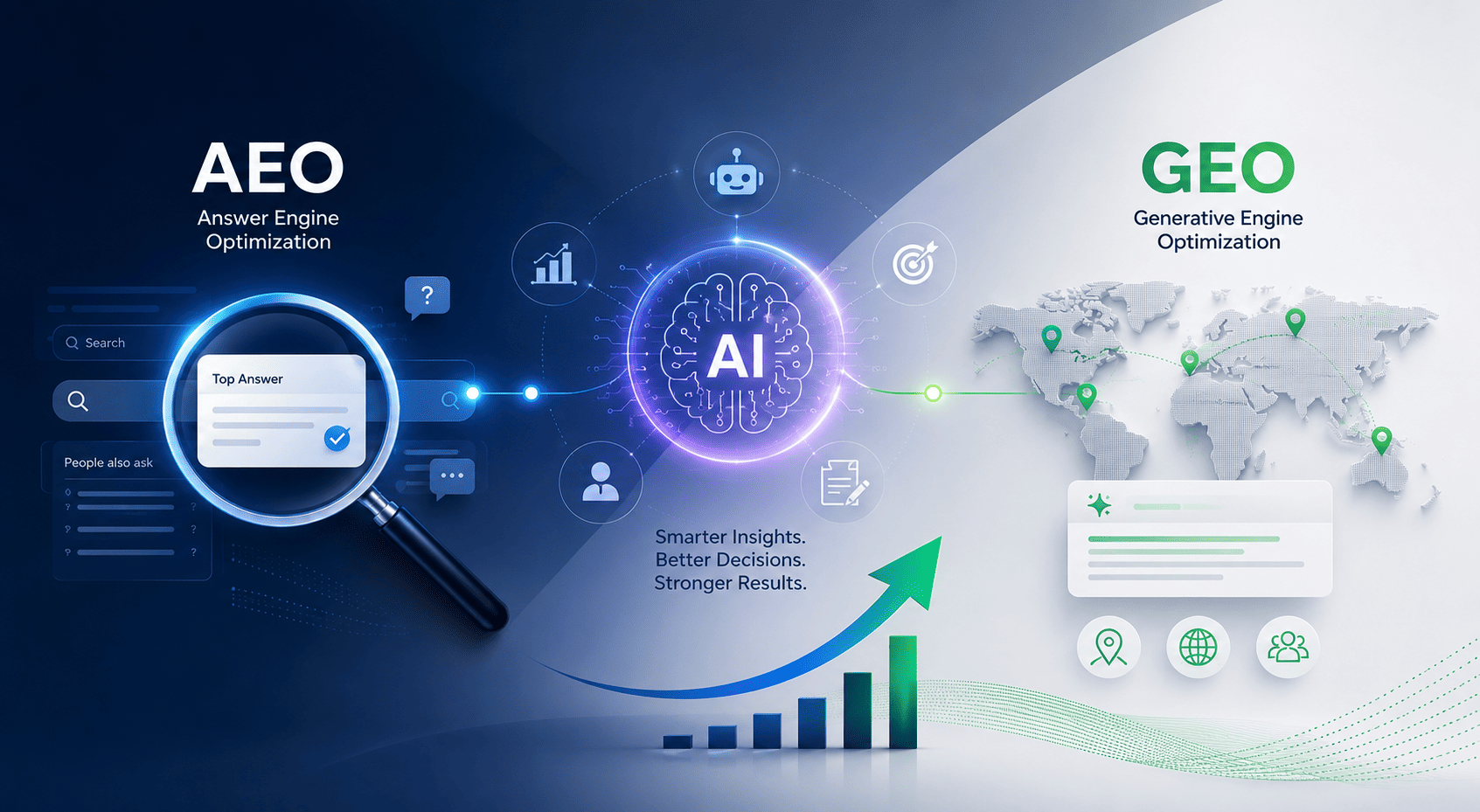
How AEO, GEO & AI Are Transforming Digital Marketing Services
Search is changing faster than ever. People no longer rely o...
Read MoreSeptember 02, 2026
.png)
How AI Is Transforming Digital Marketing Services
Digital marketing has always evolved alongside technology. F...
Read MoreAugust 03, 2026