Transforming Legacy Systems Without Starting From Scratch
Published on November 05, 2026 | Category: Digital Transformation
Imagine running a business with software that has been around for years. It still works, employees know how to use it, and it contains valuable business logic. But every time someone suggests adding a new feature, improving performance, or connecting it with another system, the development team starts sweating.
Sound familiar?
Replacing the entire application might seem like the obvious solution, but it can be expensive, time-consuming, and unnecessarily complicated. The good news? Businesses don't always need to throw away their existing software to move forward.
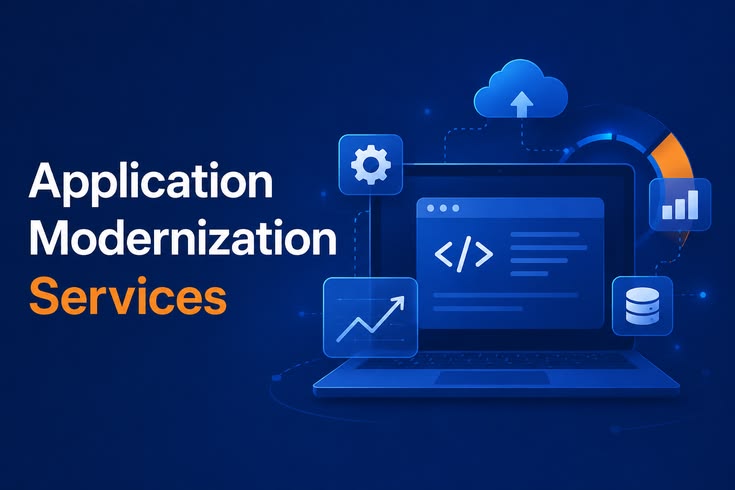
This is where Application Modernization Services come into the picture. Instead of starting from zero, application modernization helps businesses transform existing applications into more efficient, scalable, secure, and future-ready systems while preserving what already works.
Why Do Legacy Applications Become a Business Challenge?
Legacy applications are often like that old family car. It has taken you everywhere, survived countless journeys, and still starts in the morning. But now it struggles with modern roads, advanced features, and changing expectations.
Business applications experience similar challenges.
Over time, technology evolves, customer expectations increase, and business operations become more complex. Applications originally designed for simpler requirements may struggle to support modern workflows.
Common challenges include:
Limited scalability: Applications struggle when users, transactions, or workloads increase.
Integration difficulties: Connecting older systems with modern platforms becomes complicated.
Maintenance challenges: Outdated technologies can make troubleshooting and updates increasingly difficult.
Security concerns: Unsupported software components may expose applications to vulnerabilities.
Slow innovation: Introducing new features can require extensive development effort.
The problem isn't necessarily that the application is useless. Sometimes, it simply needs a smarter approach to modernization.
Application Modernization: Upgrade Your Software Without Losing Its Identity
One of the biggest misconceptions about modernization is that it means rebuilding everything from scratch.
In reality, Application Modernization Services focus on identifying what works, understanding what doesn't, and improving the application strategically.
Think of it as renovating a house. You don't demolish the entire building just because the kitchen needs an upgrade or the electrical system needs improvement.
Similarly, modernization allows businesses to retain valuable functionality while transforming outdated components.
Depending on the application's condition and business requirements, modernization may involve:
Improving existing code and application architecture.
Migrating applications to modern cloud environments.
Replacing outdated components with better alternatives.
Introducing APIs for seamless system integration.
Improving application performance and security.
Breaking large applications into smaller, manageable services.
The goal is simple: make existing software work better for today's business needs.
Choosing the Right Modernization Approach
Not every legacy application needs the same treatment. Some require minor improvements, while others need significant architectural changes.
Choosing the right strategy is an important part of successful application modernization.
Refactoring: Improve the Code Without Changing Everything
Sometimes, the biggest problem lies beneath the surface.
Refactoring improves the internal structure of an application without fundamentally changing its functionality. Developers simplify complex code, remove unnecessary dependencies, and improve maintainability.
The application continues doing what it does best, but becomes easier to manage and enhance.
Replatforming: Move to a Better Technology Foundation
What if your application works perfectly but struggles because of outdated infrastructure?
Replatforming allows businesses to move applications to modern platforms with minimal changes to their core functionality.
For example, migrating an application to a cloud environment can improve flexibility, resource management, and operational efficiency.
Rearchitecting: Give Your Application a New Structure
Some applications have grown so complex that improving individual components is no longer enough.
Rearchitecting involves redesigning the application's structure to support modern requirements. This might include adopting cloud-native architecture or introducing containers and microservices to improve modularity and deployment flexibility.
Replacing Components: Modernize Only What Needs Attention
Sometimes, only specific parts of an application have become outdated.
Businesses can replace those components while retaining the rest of the system. This approach reduces unnecessary redevelopment and allows modernization efforts to focus on areas with the greatest impact.
How Modernization Makes Existing Applications Future-Ready
Modernization isn't simply about making old software look new. It's about preparing applications for opportunities that didn't exist when they were originally developed.
Here's how modern technology can change the way legacy applications operate.
Cloud Integration
Cloud migration can help applications become more flexible and adaptable to changing workloads. Businesses can explore modern infrastructure options without necessarily redesigning every application component.
API Integration
APIs help older applications communicate with newer platforms, services, and business tools. Instead of remaining isolated, legacy systems can become part of a connected digital ecosystem.
Automation and DevOps
Modern development practices can improve software delivery, testing, and deployment.
With DevOps Services and CI/CD Pipeline Services, development teams can introduce updates more consistently, automate repetitive processes, and reduce the effort involved in maintaining applications.
Improved User Experience
Sometimes, the application works perfectly from a technical perspective but feels frustrating to use.
Modernization can include interface improvements, better navigation, and more intuitive workflows. Thoughtful UI/UX Design can make familiar applications easier and more enjoyable for employees and customers.
After all, even powerful software deserves a user interface that doesn't feel like a time machine.
Can Businesses Modernize Without Disrupting Daily Operations?
This is probably one of the biggest concerns surrounding legacy application transformation.
Nobody wants to modernize their software only to discover that everyday business operations have suddenly become a complicated puzzle.
A well-planned modernization strategy helps minimize disruption through gradual implementation.
Businesses can modernize applications in stages, test new functionality before deployment, and maintain existing systems while improvements are introduced.
This approach allows teams to identify potential issues early and make adjustments before changes affect critical operations.
Working with experienced Software Development Services teams can also help businesses assess application dependencies, plan migration activities, and establish realistic modernization priorities.
The key is not to rush modernization. It is to make progress without unnecessarily putting business continuity at risk.
Modernization Is Also About Preparing for What's Next
Technology never really sits still.
Artificial intelligence, automation, cloud computing, and connected digital experiences continue changing how businesses operate.
Applications that cannot integrate with emerging technologies may eventually limit innovation.
Modernization creates opportunities to prepare existing systems for future capabilities, including AI-driven workflows, advanced analytics, and intelligent automation.
For example, a modernized application may become easier to integrate with Business Process Automation Services, helping businesses reduce repetitive tasks and improve operational efficiency.
Similarly, better data accessibility and integration can create opportunities for future analytics initiatives.
Modernization doesn't mean adopting every new technology available. It means creating a foundation that makes adopting useful technologies easier when the business is ready.
The Smartest Modernization Strategy Starts With What You Already Have
Here's something worth remembering: your legacy application may contain years of valuable business knowledge, established workflows, and functionality that would be difficult to recreate.
Throwing everything away isn't always innovation.
Sometimes, the smartest technological decision is understanding what deserves to stay and what deserves to change.
With the right Application Modernization Services, businesses can preserve valuable application capabilities, improve performance, strengthen security, and introduce modern technologies without unnecessarily rebuilding everything.
The journey begins with understanding the application, identifying business priorities, and selecting a modernization approach that makes practical sense.
Because the future of software development isn't always about building something completely new.
Sometimes, it's about giving something valuable a much better future.
Ready to rethink your legacy applications? Start by identifying the parts of your existing software that create the most friction, and explore how a carefully planned modernization strategy can turn those challenges into opportunities for improvement.
Latest Blogs
Reality Is Great, But Have You Tried the Virtual Version?
Imagine trying a sofa in your living room without buying it,...
Read MoreOctober 29, 2026
.png)
How Full Stack Development Services Help Businesses Build Scalable Applications
In today's competitive digital environment, businesses need...
Read MoreOctober 22, 2026
Container & Microservices: A Complete Guide to Application Deployment
Modern applications need to be reliable, flexible, and easy...
Read MoreOctober 13, 2026
Related Blogs

What Is the Difference Between AR and VR Development Services?
Augmented Reality (AR) and Virtual Reality (VR) are transfor...
September 11, 2026
Read More
Why Every Business Needs Digital Transformation Services in the AI Era
Artificial Intelligence (AI) is reshaping the way businesses...
July 23, 2026
Read More.png)
Why Every Business Needs a Digital Marketing Agency
In today’s fast-paced digital landscape Why Every Business N...
July 03, 2026
Read More