AI Content vs Human Content: What Google Really Ranks
.png)
Published on February 13, 2026 | Category: Digital Marketing
For a long time, SEO felt predictable. You researched keywords, wrote content, optimized headers, built links, and rankings followed. Then AI entered the room, quietly at first, and suddenly everyone started asking the same uneasy question:
Is Google going to punish AI content?
Does Google prefer human content?
Can AI content rank on Google at all?
The debate around AI content vs human content isn’t just about rankings anymore. It’s about trust, originality, and whether search engines can still tell the difference between something written for people and something written for scale.
The truth is far more interesting than the panic headlines suggest.
What AI Content vs Human Content Actually Means Today
When people talk about AI content vs human content, they usually oversimplify it.
AI content is not inherently robotic.
Human content is not automatically insightful.
AI-generated content is created by models trained on massive datasets to predict the most statistically likely next word. Humans, on the other hand, write from experience, context, emotion, and judgment, but humans also rush, copy competitors, and repeat the same tired points.
From Google’s perspective, the distinction is not “AI vs human.”
It’s helpful vs unhelpful.
That framing explains almost everything about how Google ranks AI vs human content.
Google isn’t fighting AI.
Google has always fought low-effort content.
What Google Actually Thinks About AI-Generated Content
Google addressed this confusion directly in its Search Central guidance, clarifying that AI-generated content does not violate guidelines by default. The issue arises only when content is created solely to manipulate rankings rather than to help users.
(Reference: Google Search Central – “Google Search and AI Content”)
In other words, if you’re asking “what Google thinks about AI-generated content, "the answer is refreshingly boring:
Google doesn’t care how content is produced.
Google cares about why it exists.
This is why asking "Does Google prefer human content?" is the wrong question. Google prefers content that clearly and credibly solves a problem.
Can AI Content Rank on Google? Yes-But Not the Way Most People Use It
There’s no shortage of examples proving that AI content can rank on Google. But there’s a pattern behind the success stories that rarely gets discussed.
AI content ranks when:
It is edited by humans
It includes original insights or examples
It aligns strongly with search intent
It avoids rewriting what already ranks
Where AI content fails is when it becomes a shortcut instead of a tool.
A revealing AI content ranking study trend shows that AI-written pages tend to perform well initially but lose rankings over time if they lack depth, originality, or updates. This happens because Google’s systems increasingly measure user satisfaction, not just keyword relevance.
That’s where surface-level AI content starts leaking.
not myths.
The Real Difference Between AI and Human Content SEO
The difference between AI and human content SEO isn’t about intelligence; it’s about experience.
AI can summarize what is already known.
Humans can explain why it matters.
AI can structure information efficiently.
Humans can connect it to real-world consequences.
For example, an AI can explain “content quality signals.” A human marketer can explain how a poorly written pricing page lost conversions even though it ranked #1 and what fixed it.
That difference directly impacts human content vs AI SEO ranking over the long term.
Google’s systems are increasingly trained to detect:
Repetition across the web
Predictable phrasing patterns
Lack of firsthand experience
Shallow answers to complex questions
This doesn’t mean AI content is bad. It means unreviewed AI content is fragile.
Is AI Content Bad for SEO? Only When It’s Treated as a Factory
The question “Is AI content bad for SEO?” misses a crucial nuance.
AI content becomes bad for SEO when:
It is published at scale without editorial review
It mirrors top-ranking pages too closely
It lacks original examples, data, or opinions
It exists only to target keywords
Google has become very good at identifying “content that looks complete but feels empty.” This is where many AI-driven blogs fail, not because Google detects AI, but because users disengage.
Low engagement sends a louder signal than authorship ever could.
How Google Evaluates Content Quality (And Why This Matters More Than Ever)
Understanding how Google evaluates content quality is essential going into 2026.
Google’s ranking systems increasingly focus on:
Search intent satisfaction
Demonstrated expertise and experience
Content usefulness beyond definitions
Depth over breadth
Behavioral signals like dwell time and pogo-sticking
This is clearly outlined in Google’s Search Quality Evaluator Guidelines, which emphasize Experience, Expertise, Authoritativeness, and Trust (E-E-A-T).
AI can assist with research and clarity. But experience cannot be generated. It must be added.
A Real-World Scenario That Explains Everything
Consider two articles targeting the same keyword.
One is created entirely by AI: well-written, grammatically perfect, but generic.
The other uses AI for structure and research, but a human adds client stories, industry mistakes, and practical advice learned through execution.
Initially, both may rank.
Six months later, only one remains.
Why?
Because Google doesn’t just rank content, it observes how users interact with it over time. That’s where depth, clarity, and human judgment quietly win.
This pattern shows up repeatedly in AI vs human written content comparison studies across SaaS, healthcare, and B2B tech blogs.
SEO Content Ranking Factors 2026: Where AI Fits and Where It Doesn’t
Looking ahead, SEO content ranking factors for 2026 are leaning even harder into:
Experience-based content
Author credibility
Topical authority
Content freshness and updates
Clear intent alignment
AI will play a major role in scaling content operations. But the brands that win will be the ones that treat AI as a thinking assistant, not a replacement thinker.
At JFS Technologies, this balance is critical. AI helps accelerate research and identify gaps, but humans shape the narrative, validate insights, and ensure relevance to real business challenges.
That hybrid approach is what keeps content competitive, credible, and future-proof.
So, What Does Google Really Rank?
Google ranks:
Content that answers why, not just what
Pages that feel written with intention
Information that adds something new to the conversation
Experiences users trust
The debate around AI content vs human content isn’t about choosing sides. It’s about understanding roles.
AI brings efficiency.
Humans bring meaning.
And Google?
Google follows the user, always has, always will.
If your content respects that truth, rankings tend to follow.
Also PPC vs SEO: which is better find out
Want content that ranks? Let’s build it the right way.
Contact us
Latest Blogs

What Is the Difference Between AR and VR Development Services?
Augmented Reality (AR) and Virtual Reality (VR) are transfor...
Read MoreSeptember 11, 2026
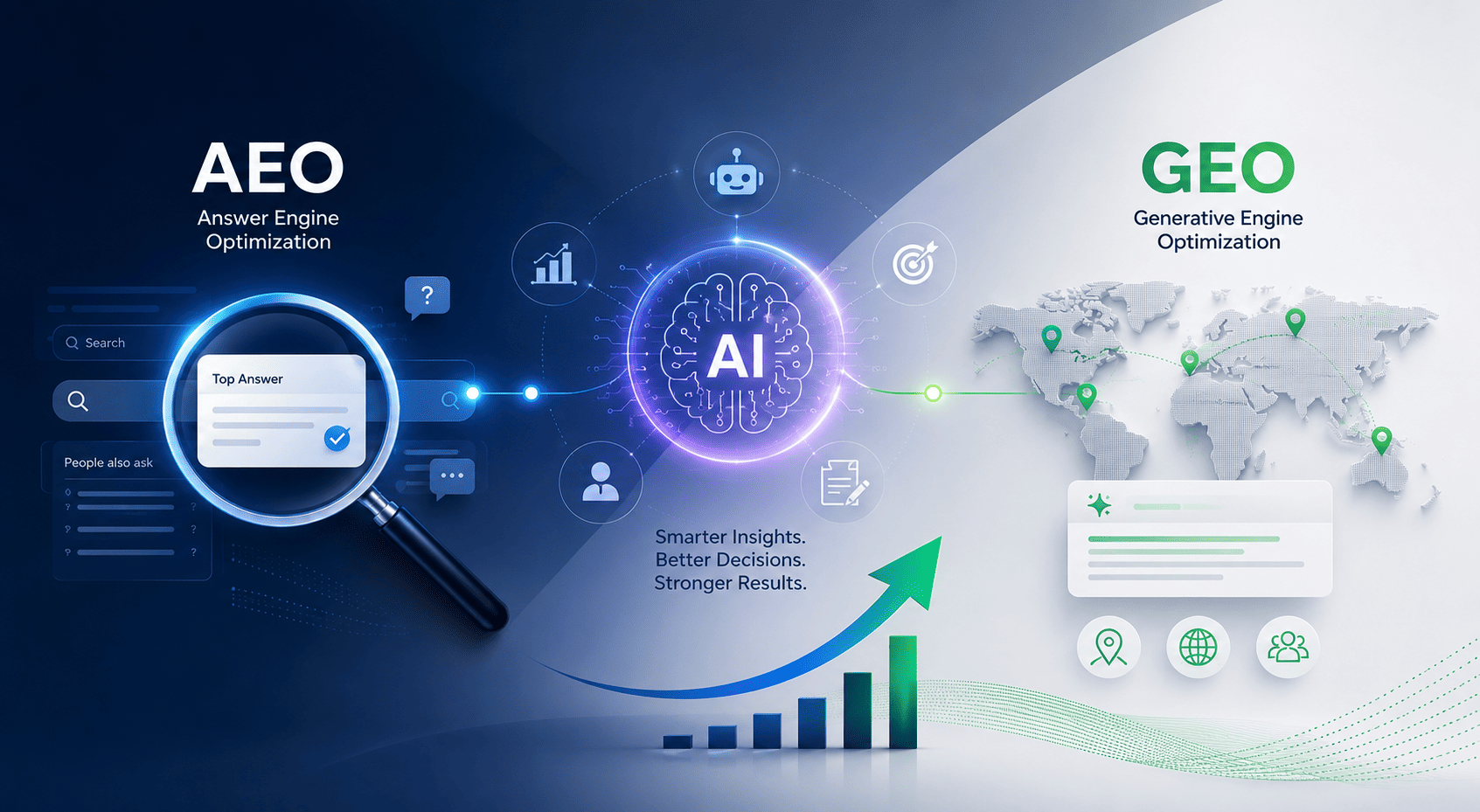
How AEO, GEO & AI Are Transforming Digital Marketing Services
Search is changing faster than ever. People no longer rely o...
Read MoreSeptember 02, 2026
.png)
Why Businesses Are Moving to Container & Microservices Architecture
As businesses scale their digital operations, traditional ap...
Read MoreAugust 18, 2026
Related Blogs
How AEO, GEO & AI Are Transforming Digital Marketing Services
Search is changing faster than ever. People no longer rely o...
September 02, 2026
Read More.png)
The Impact of Social Media Services on Modern Society
In today’s digital age, social media has become an integ...
July 14, 2026
Read More.png)
Benefits of Implementing End-to-End Sales Services for Your Business
In the realm of modern business, maintaining a c...
July 13, 2026
Read More